
Regenerative Cell Therapy Guide 2026 | Malaysia

A reader who is new to regenerative cell therapy often runs into the same problem within minutes. One source talks about stem cells as if all cell products are interchangeable. Another mixes investigational treatments with established transplant medicine. A clinic page may focus on a single application without explaining how the broader field fits together. If you are trying to build a reliable mental map before reading deeper, that fragmentation makes the subject harder than it needs to be.
This page solves that problem. It gives you a top-level view of regenerative cell therapy as a field, then organizes the major sub-topics into clear sections. As a result, you can decide where to go next with more confidence. You will see what regenerative cell therapy usually means in practice, how different cell types and sourcing models differ, why manufacturing quality changes the risk profile, how access pathways work in Malaysia, and how evidence varies by indication.
You should also keep one distinction in mind as you read. The regenerative medicine umbrella includes both established care and investigational approaches. In Malaysia, clinicians recognize hematopoietic stem cell transplantation for specific blood and immune disorders. However, many other cell-based applications, including many mesenchymal stem cell and exosome-related offerings, remain investigational. Clinicians and patients should assess them with appropriate regulatory and clinical caution.
At Regenexasia, the editorial approach across this hub centers on scientific validation, product quality, and regulatory clarity. That focus matters because readers at the awareness stage do not need hype. You need accurate categories, realistic expectations, and a way to separate biologic rationale from proven clinical benefit. This hub gives you that structure, then routes you to deeper pages that unpack each branch in detail.
Contents
How Regenerative Cell Therapy Fits Into Medicine
Regenerative cell therapy is a broad term for medical approaches that use living cells, cell-derived material, or closely related biologic strategies to repair, replace, restore, or modulate tissue and immune function. The category is broad on purpose. It may include established transplant settings, investigational mesenchymal stem cell programs, immune cell therapies such as NK cells, and cell-derived products such as extracellular vesicles or exosomes, depending on how a provider or regulator defines the product class.
The first reason this category creates confusion is that biology, manufacturing, and regulation do not move at the same pace. A therapy may have a plausible mechanism in preclinical work, early patient data in a narrow indication, and still not qualify as established routine care. Research often advances in layers. Cell source, dosing schedule, route of administration, release testing, storage conditions, and patient selection can all change outcomes and safety profiles.
A second source of confusion is the loose use of the same phrase for very different products. One clinic may use “stem cell therapy” for minimally manipulated autologous material. Another may mean expanded donor-derived mesenchymal stem cells manufactured under controlled conditions. A third may market exosomes under the same umbrella, even though exosomes are not stem cells. For readers, the practical lesson is simple: you cannot evaluate this field well unless you know what the product is, how teams made it, and under what clinical framework clinicians offer it.
This explains why the broader field category and adjacent topic areas such as Stem Cell Therapy and Exosome Therapy should be read as related but not identical. The field is not one technology. Instead, it is a family of therapies with different evidence standards, risk profiles, and access pathways.
Who This Hub Helps and What Questions It Answers
Three audiences often overlap here. First, patients and families may want to know whether a cell-based option is worth discussing with a licensed physician. Second, clinicians and clinic operators may need a structured view of products, pathways, and compliance concerns. Third, informed readers may want to understand how the field is actually organized instead of relying on marketing shorthand.
The questions above the cluster level usually sound like this:
Those are the questions this page answers at a high level. The cluster sections below then route you to the most relevant in-depth pages. If your main need is orientation, keep reading. If you already know your biggest question, the table of contents can take you directly there.
Core Concepts: What Regenerative Cell Therapy Includes

Any serious discussion of regenerative cell therapy has to begin with definitions. The field groups together several therapy models that share one idea, which is the use of biologic material to influence tissue repair, immune signaling, or cell replacement. Yet the products inside this umbrella differ sharply in source material, potency, manufacturing requirements, and clinical maturity.
The broadest starting point is the distinction between cell-based and cell-derived approaches. Cell-based therapies contain living cells at the point of administration. Examples may include hematopoietic stem cells used in transplant medicine, mesenchymal stromal or stem cell products studied across multiple indications, and NK cell therapies developed for immune-focused use. Cell-derived approaches may include secreted factors or extracellular vesicles such as exosomes. These are biologically related. However, readers should not treat them as interchangeable.
What the umbrella term covers, and what it often obscures
Regenerative cell therapy is useful as a hub term because it captures the breadth of the field. It becomes misleading if the umbrella flattens important differences. Mesenchymal stem cell therapy is often discussed for tissue repair or immune modulation. NK cell therapy centers on immune cell function and has a very different rationale. Exosome therapy usually refers to vesicle-mediated signaling rather than transplantation of living stem cells. Once you separate those categories, the field becomes much easier to evaluate.
If you want the broad framework first, start with what is regenerative cell therapy. That page is the best first branch if your main goal is to understand terminology, major product families, and how the field fits together conceptually.
Autologous and allogeneic sourcing changes the whole discussion
One of the most practical concepts in this cluster is source. Autologous therapy uses the patient’s own cells or tissue. Allogeneic therapy uses donor-derived material. That difference affects manufacturing scale, timing, quality consistency, immune compatibility, storage, and logistics. In simple terms, autologous models may feel more personal but are often more variable and individualized. Allogeneic models may offer batch-based consistency and off-the-shelf access, but they raise different immunologic and manufacturing questions.
The still-unpublished spoke on autologous versus allogeneic therapy belongs here because source is not a side detail. It changes the entire clinical and commercial model. A clinician evaluating a supplier and a patient evaluating a program both need to ask exactly where the cells came from, how donor eligibility was handled, what manipulation occurred, and what testing teams performed before release.
Established care and investigational use should never be merged
Readers often encounter regenerative medicine as a single market category, but medicine does not treat it that way. In Malaysia, established stem cell care centers on hematopoietic stem cell transplantation for specific blood and immune disorders. Many other uses discussed under regenerative cell therapy, including many MSC and exosome pathways, remain investigational. That distinction should shape how you read every later section in this hub.
For the full picture, our complete guide on what is regenerative cell therapy walks through the field’s definitions, categories, and major therapy models in more detail.
Regenerative Cell Therapy in Malaysia
Malaysia is one of the most searched regional contexts for regenerative cell therapy, and for good reason. Readers can find an active private healthcare environment, growing public interest in stem cell and related biologic treatments, and a mix of legitimate technical language and uneven public-facing explanations. That combination makes country-specific literacy especially important.
The first issue is approval status. Malaysia does not have a single standalone “stem cell law.” Oversight is layered across the Ministry of Health, NPRA, the Drug Control Authority, the Malaysian Medical Council, and other governance channels depending on the product and pathway. Under the current framework, hematopoietic stem cell transplantation is the best-established category. Many other cell-based offerings are better understood as investigational, available only through appropriately governed clinical pathways, approved research settings, registered products where applicable, or tightly controlled medical frameworks.
Why “available” is not the same as “approved”
This is one of the most important literacy points for any reader exploring stem cell Malaysia questions. A therapy being marketed, discussed, or even administered in a private setting does not by itself prove that it is approved for a specific indication as established standard care. Responsible evaluation depends on whether the therapy has a defined regulatory status, whether manufacturing claims are documented, and whether the clinical use is presented with appropriate caution.
If Malaysia-specific verification is your starting point, the most relevant route is stem cell malaysia. That deeper guide focuses on how to assess legitimacy, cGMP claims, product categories, and provider-level credibility in the local market. You can also review this stem cell malaysia provider guide for a practical clinic-focused checklist.
Clinical trials are part of the real access picture
The Malaysia discussion is not only about commercial access. Clinical trials matter because they are one of the clearest pathways through which investigational cell therapies may be studied responsibly. For some readers, especially those looking at early-stage or evidence-developing therapies, trial participation may be more relevant than private treatment access. Trial review should include study phase, inclusion criteria, ethics oversight, sponsor identity, safety monitoring, and whether the protocol matches the marketed claims people may have seen elsewhere.
The planned spoke on cell therapy clinical trials in Malaysia fits naturally inside this cluster because it addresses a different question from provider verification. One asks, “Is this provider credible?” The other asks, “Is there a formal research pathway that fits my condition, location, and eligibility?” Those are related, but not identical, decisions.
Cost tells you something, but not enough by itself
Price is one of the most common entry points into the topic, but it is a poor first filter if quality and documentation are unclear. The existing cost article in this hub already establishes an important practical idea: quoted fees vary because cell type, indication, dose design, logistics, facility standards, and testing workflows vary. Higher pricing does not automatically prove better governance, and lower pricing may reflect a reduced documentation burden, a simpler workflow, or a weaker quality system.
Readers who land on cost first often benefit from stepping back and checking the deeper framework before comparing quotes. Regenexasia’s educational materials consistently place regulatory and manufacturing clarity ahead of headline pricing because cost without product definition is not a reliable decision tool. For a price-focused overview, see cell therapy cost in Malaysia.
For the full picture, our complete guide on stem cell malaysia explains how Malaysia access, quality signals, and governance standards fit together.
How Cell Therapy Across Different Conditions Is Evaluated
Many readers arrive at regenerative cell therapy through a condition, not a technology. They may be asking about joint symptoms, wound repair, immune dysfunction, hair loss, neurologic decline, or age-related concerns. That is understandable, but condition-first searching creates a risk: you can end up comparing very different treatment concepts under a single disease label without realizing how far the evidence may vary.
The right way to frame this cluster is indication-level thinking. That means asking four separate questions. What is the biological rationale for using a given cell therapy in this condition? What level of human evidence exists? Is the use established, investigational, or speculative? What outcomes are actually being measured, symptom change, imaging markers, tissue response, transfusion independence, survival, or something else?
Evidence can be stronger in one indication and weak in the next
Regenerative cell therapy is not validated as a single block across all conditions. One indication may have established transplant pathways, while another may have only early safety studies or small exploratory trials. This is why condition pages should never be read as interchangeable with field-level pages. The mechanism that makes sense biologically in one tissue or disease context may not translate well to another, and even within one indication, outcome claims may outpace the quality of published evidence.
The route for this cluster is cell therapy for conditions. That deeper page is where readers should go if they want indication-by-indication framing rather than a field-wide overview. If you are comparing product fit by diagnosis, which cell therapy for which condition may also help.
Malaysia advertising law makes disease claims especially sensitive
Readers also need to understand that disease-specific marketing is not just a scientific issue. In Malaysia, public advertising restrictions apply to a range of scheduled diseases and healthcare claims. That means you should treat sweeping public claims about curing, reversing, or definitively treating serious diseases with extra caution. Even where research is active, public-facing promotional language may still be legally restricted or scientifically overstated.
This matters because people often interpret confidence of language as confidence of evidence. In practice, the reverse may be true. A carefully hedged explanation that says a therapy is being studied may be more trustworthy than an assertive sales page that offers broad promises.
Outcome goals differ across tissues and patient profiles
A joint-focused reader may care about pain, function, or structural progression. A wound care reader may care about closure, tissue quality, infection risk, and time to healing. An oncology-adjacent reader looking at immune cell therapies may be dealing with a completely different standard of evidence and monitoring. Once you see that, broad phrases such as “cell therapy for conditions” become a starting label rather than a conclusion.
Category pages can also help you branch by clinical area. Depending on your topic, readers often continue into areas such as Hair Loss & Alopecia, Osteoarthritis & Joint Pain, Wound Healing & Skin Repair, or other adjacent condition categories. Those are useful for orientation, but the key lesson remains the same: indication-specific evidence matters more than category-level enthusiasm.
For the full picture, our complete guide on cell therapy for conditions walks through how different indications should be evaluated, compared, and interpreted.
Cell Therapy Science, Processing, and Product Design
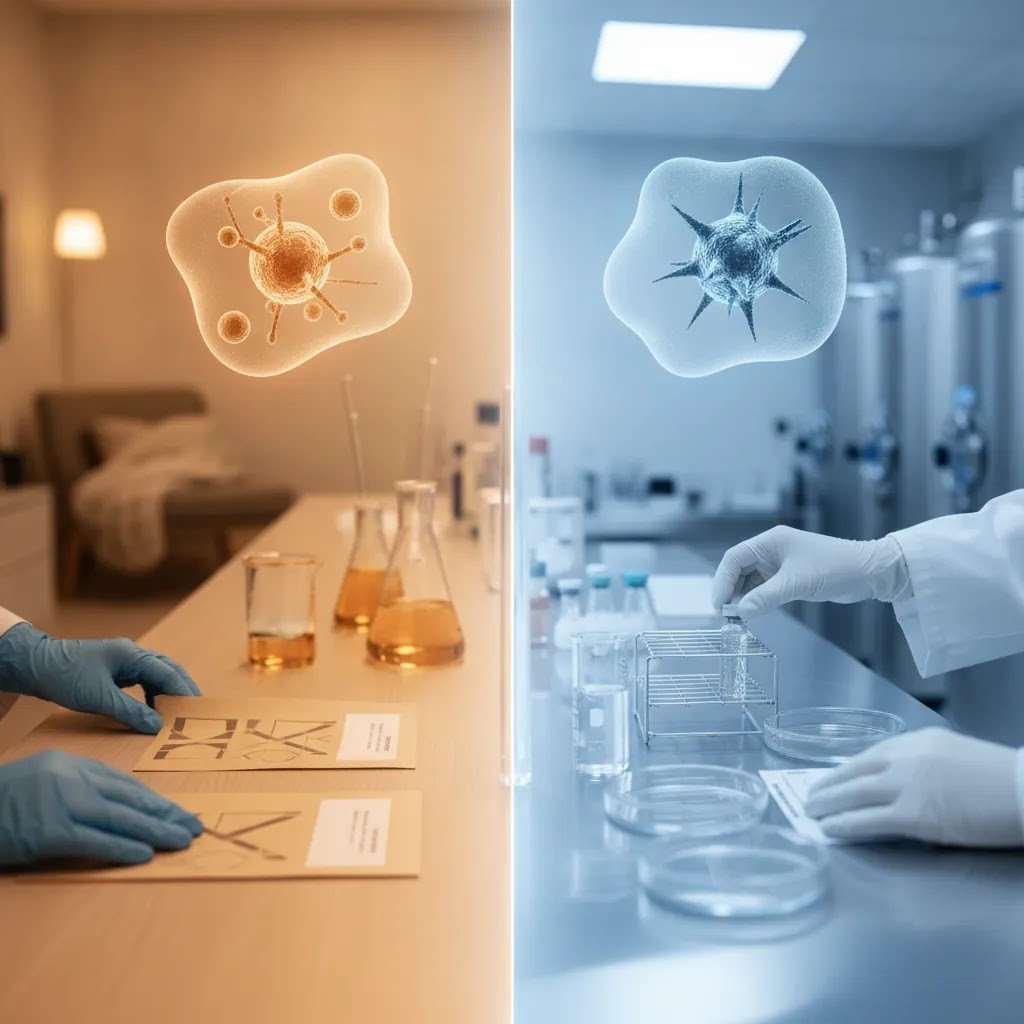
This cluster is where the field becomes technical, and it is also where many quality differences are hidden from casual readers. Two providers may use similar public-facing language while delivering products that differ substantially in source screening, expansion method, batch consistency, viability, sterility safeguards, release criteria, storage, transport, and final product characterization. For that reason, the science cluster is one of the most important parts of the hub.
At the broadest level, cell therapy science asks how a biologic product becomes fit for clinical use. That includes donor or patient selection, collection and processing, culture or expansion where relevant, contamination control, identity and potency testing, cryopreservation, thaw handling, route of administration, and post-treatment monitoring. Readers do not need to become laboratory experts, but you do need to know which questions separate a real manufacturing conversation from a vague one.
Mechanism is not the same as proof
Many products in regenerative cell therapy have plausible mechanisms. MSC-type products may be discussed in terms of paracrine signaling, immune modulation, and tissue support. NK cell therapies are framed around innate immune surveillance and cytotoxic activity. Exosome-related approaches are described through signaling cargo and intercellular communication. These mechanisms may help explain why a therapy is being studied, but they do not by themselves prove clinical benefit in any particular disease setting.
The deeper branch for this entire cluster is cell therapy science. That is the right next page if you want to understand product classes, biological mechanisms, testing concepts, and why manufacturing language matters so much.
Batch quality, traceability, and release testing are not optional details
If a provider claims cGMP production or high-standard laboratory control, you should expect specific evidence behind the language. That may include documentation of sterility testing, identity markers, viability thresholds, batch records, donor eligibility processes for allogeneic products, storage controls, and traceability from source to administration. A reader does not need every internal document, but the program should be able to explain what is being controlled and why it matters.
This is one area where the scientific and clinical sides of the field meet directly. Poor manufacturing discipline can compromise safety, consistency, or interpretability of results. Stronger manufacturing controls do not guarantee better patient outcomes, but they improve the credibility of the product being evaluated.
Product architecture influences logistics and access
Science also shapes practical questions. Autologous products may depend on individualized collection and processing windows. Allogeneic platforms may be built for scale and stock availability. Pooled donor approaches may aim for consistency or supply efficiency, but they also raise their own sourcing and characterization questions. The product architecture can affect timing, pricing, repeatability, and how easily a protocol can be standardized across patients or clinics.
That is why this cluster belongs in any serious orientation to regenerative cell therapy. Readers often focus first on the condition or the claim. A better method is to ask what the product is, how teams manufactured it, and whether the science described by the provider matches the treatment narrative being offered.
For the full picture, our complete guide on cell therapy science explains the mechanisms, product design choices, and quality controls that shape the field.
How to Compare Regenerative Cell Therapy Approaches Across the Hub
Once you have seen the four major clusters, the next step is learning how to compare them without collapsing the differences. A useful approach is to evaluate each therapy or provider across the same set of dimensions. That creates a fairer comparison than focusing on one attractive claim or one alarming risk in isolation.
| Dimension | What to ask | Why it matters |
|---|---|---|
| Product type | Is it a living cell therapy, an immune cell product, or a cell-derived product such as exosomes? | Different product classes have different mechanisms, evidence bases, and regulatory implications. |
| Source | Is it autologous or allogeneic, and how was the source screened or collected? | Source affects consistency, immune compatibility, timing, and manufacturing controls. |
| Manipulation level | Was the material minimally processed, cultured, expanded, pooled, or otherwise substantially manipulated? | Processing level often changes the regulatory pathway and quality expectations. |
| Clinical indication | What exact condition or treatment objective is being discussed? | Evidence does not transfer automatically from one indication to another. |
| Evidence stage | Is support based on rationale, case reports, early trials, or recognized standard care? | Evidence stage helps calibrate expectations and consent discussions. |
| Quality system | What does the provider say about cGMP, release testing, traceability, and storage control? | Manufacturing quality shapes credibility, safety oversight, and reproducibility. |
| Access pathway | Is the therapy offered through standard care, private treatment, or a formal clinical trial? | Access route changes the ethical, legal, and monitoring framework. |
| Total cost | What is included beyond the procedure itself? | Program cost often includes testing, logistics, follow-up, and facility overhead. |
Start comparisons with product identity
A useful comparison framework starts with product identity, not marketing category. If two providers use the same umbrella term but mean different products, most direct comparisons become weak. The same applies if one therapy is being discussed in a recognized transplant context and another in an exploratory private-use setting.
This is also where a category-first site structure can help. Readers moving laterally between Stem Cell Therapy and Exosome Therapy can compare neighboring topics without assuming they carry the same evidence level or biologic profile. That kind of structured reading usually leads to better questions during medical consultation.
Regulation, Evidence, and Safety Signals You Should Understand First
Regenerative cell therapy attracts strong interest because the biologic logic can sound compelling. Yet the safest way to approach the field is to separate three issues that are often merged in public discussion: scientific plausibility, legal availability, and proven clinical benefit. A therapy may have one of these and not the others.
In Malaysia, the relevant oversight picture is layered rather than singular. Depending on the product and context, readers may need to consider the Ministry of Health, NPRA, the Drug Control Authority, the Malaysian Medical Council, ethics committees, and facility licensing requirements. Cultured or more-than-minimally-manipulated cell products may fall into cell and gene therapy product frameworks. Public-facing treatment claims also raise advertising-law issues. That matters because legality of public promotion and scientific promise are not the same thing.
For a global consumer safety perspective, the FDA regenerative medicine consumer alert warns patients to be cautious about unapproved regenerative medicine products and unsupported claims. The ISSCR stem cell treatment guide also emphasizes asking how a therapy is regulated, what evidence supports it, and whether risks and alternatives have been clearly explained. In addition, the NPRA provides the official Malaysian regulatory reference point, and the Malaysian Medical Council provides physician governance context.
Signals that should raise careful questions
Safety also needs realistic framing. Cell-based treatments may carry immediate procedure-related risks, immunologic issues, infection concerns, product-quality concerns, and the broader risk of spending time and money on a therapy whose benefit is still uncertain. These risks differ by product class and route of administration, which is one reason broad safety claims are rarely trustworthy.
Regenexasia’s educational positioning in this area is most useful when it helps readers verify mechanisms against manufacturing discipline and regulatory fit, rather than simply repeating high-level regenerative medicine language. For a newcomer, that may be the difference between being impressed by terminology and actually understanding what is being offered.
A Practical Starting Path for Patients, Families, and Clinics

Readers often ask for one simple starting point, but the best sequence depends on your role. A patient exploring options for a chronic condition needs a different route from a clinic evaluating a product partner. Still, most people benefit from following the same order of questions before they get too far into cost or claims.
For patients and families, this usually leads to a more productive physician conversation. For clinics, it creates a basic due-diligence checklist before discussing integration, referral, or sourcing. For both groups, the sequence prevents a common mistake, which is treating regenerative cell therapy as a single consumer product instead of a medically and technically diverse field.
If your questions are still broad, start with the field definition cluster. If your questions are local to Malaysia, go directly to the Malaysia cluster. If you already know the condition is your main concern, move to the indications cluster. If your main challenge is evaluating technical credibility, the science cluster should come next.
Where to Go Next
This hub is meant to orient you, not keep you at the surface. The best next step depends on which uncertainty matters most right now.
You can also browse the wider educational structure through the topic area homepage and adjacent categories such as Stem Cell Therapy. For readers comparing cell-based and cell-derived approaches, the Exosome Therapy category provides a useful neighboring branch.
If you prefer to evaluate the field through a methodology-centered lens, Regenexasia’s broader resources emphasize scientific validation, regulatory fit, and quality assurance rather than product hype. That makes them most useful as a structured reading path before any clinical or purchasing decision.
Frequently Asked Questions
What is regenerative cell therapy in simple terms?
Regenerative cell therapy is a broad medical category that uses cells or cell-derived biologic material to support tissue repair, replacement, or immune modulation. The term is broad enough to include very different approaches, so the simple definition should always be followed by a second question: what exact product is being discussed? A living stem cell product, an immune cell therapy, and an exosome-based product may all sit under the same umbrella but differ sharply in mechanism, evidence level, and regulation.
Is regenerative cell therapy the same thing as stem cell therapy?
No. Stem cell therapy is one part of the broader regenerative cell therapy field. The larger category may also include immune cell therapies such as NK cells and cell-derived products such as exosomes. Public discussion often compresses these into one idea, but that can mislead readers. The safest habit is to identify the exact product class before judging the likely benefits, risks, or regulatory status. Broad labels are useful for navigation, but they are weak tools for clinical decision-making.
How does regenerative cell therapy work?
That depends on the product. Some therapies aim to replace or restore cell populations. Others work mainly through signaling, immune modulation, or support of tissue repair processes rather than direct tissue replacement. Mesenchymal stem cell products are often discussed in terms of paracrine effects and immunomodulation. NK cell therapies are framed around immune surveillance and cytotoxic activity. Exosome approaches focus on signaling cargo. Research suggests mechanisms vary significantly, so no single explanation fits the whole field.
Is regenerative cell therapy proven?
Only in specific contexts. Certain stem cell transplant applications, especially hematopoietic stem cell transplantation for particular blood and immune disorders, are established parts of modern medicine. Many other regenerative cell therapy uses remain investigational, with evidence ranging from preclinical work to early human studies and selected clinical trials. A biologically plausible therapy is not automatically a proven one. Readers should look for indication-specific data, not general enthusiasm about regenerative medicine as a whole.
What is the difference between autologous and allogeneic cell therapy?
Autologous therapy uses cells or source material from the same patient. Allogeneic therapy uses donor-derived material. This affects timing, manufacturing scale, variability, storage, and immune considerations. Autologous models may be more individualized but can vary substantially from patient to patient. Allogeneic models may allow batch-based production and faster access, but they depend on donor screening, stronger manufacturing systems, and appropriate immunologic assessment. The distinction is central, not secondary, when comparing products.
Are exosomes a form of stem cell therapy?
No. Exosomes are not stem cells. They are extracellular vesicles that may carry proteins, lipids, and nucleic acids involved in cell-to-cell signaling. They are often discussed alongside regenerative cell therapy because they are biologically connected to cell-based research, but they should not be described as stem cells. That difference matters scientifically and regulatorily. If a provider uses both terms interchangeably, you should ask for a clearer explanation of the product identity and how it is manufactured.
Where does NK cell therapy fit inside regenerative cell therapy?
NK cell therapy sits on the immune cell side of the broader field. Natural killer cells are part of the innate immune system and are being studied in areas where immune targeting matters. The rationale, manufacturing process, and monitoring concerns differ from those of mesenchymal stem cell products or exosome-related therapies. Readers should treat NK cell therapy as a distinct branch rather than assuming lessons from stem cell programs transfer directly. Product class matters before condition-level comparison begins.
What does mesenchymal stem cell therapy usually mean?
Mesenchymal stem cell therapy, often abbreviated MSC therapy, generally refers to the use of mesenchymal stromal or stem cell populations that are being studied for tissue-support and immunomodulatory effects. The term can hide major differences in source tissue, donor model, manufacturing method, expansion status, and final product quality. Because of that, two MSC programs may sound similar but differ in meaningful ways. Readers should ask about source, manipulation level, release testing, and the indication being targeted.
Is regenerative cell therapy available in Malaysia?
Some forms are, but availability is not a single category. In Malaysia, hematopoietic stem cell transplantation is the clearest established stem cell treatment area for specific blood and immune disorders. Many other cell-based applications are better understood as investigational or condition-specific offerings that require careful review of regulatory pathway, facility standards, and clinical governance. If you are researching access in Malaysia, the safer question is not simply whether it is available, but under what framework it is being offered.
How should I evaluate a cell therapy provider in Malaysia?
Start by identifying the exact product, its source, its manufacturing pathway, and its intended indication. Then ask how the provider describes regulatory status, quality systems, traceability, release testing, storage, and physician oversight. Strong programs should be able to explain these basics clearly. You should also be cautious with broad disease claims or vague use of words such as approved or certified. A technically impressive website is not a substitute for documentation and responsible clinical framing.
Does higher cost mean higher quality in cell therapy?
Not necessarily. Higher pricing may reflect stronger laboratory controls, more complex logistics, better documentation, or multi-step follow-up. It can also reflect brand positioning or added service layers. Lower pricing may indicate a simpler workflow, but it may also signal fewer safeguards or less transparent manufacturing. Price is best treated as one data point after the product type, quality system, and treatment pathway are understood. Without those basics, cost comparisons are often misleading.
Can regenerative cell therapy be offered through clinical trials?
Yes. Clinical trials are an important access route for many investigational cell therapies. A trial framework may provide clearer protocol design, ethics oversight, inclusion criteria, and structured safety monitoring than a loosely described commercial offering. That does not mean every trial is appropriate for every patient, but it often means the evidence-generation process is more explicit. If you are considering this route, review the trial phase, study objectives, location, sponsor, eligibility criteria, and follow-up requirements carefully.
What are the main risks of regenerative cell therapy?
Risks vary by product and route of administration. They may include procedure-related complications, infection risk, contamination concerns, immune reactions, variable product quality, and uncertainty about benefit. Another practical risk is misinterpretation, paying for a therapy whose evidence is still limited because the language around it sounded more definitive than the data support. Safety should be discussed at the product and indication level, not as a single blanket statement covering the whole field.
Why do manufacturing standards matter so much?
Because the product itself is highly sensitive to how it is sourced, processed, stored, and released. In cell therapy, manufacturing is part of the clinical story, not a background detail. Batch consistency, sterility controls, viability, identity markers, donor screening, and traceability all affect how credible a product is and how safely it may be used. Stronger manufacturing systems do not promise better outcomes, but they usually improve trust in what is actually being administered and how reproducible it may be.
How can I tell whether a claim is too strong?
Look for signs that uncertainty has been erased. Claims deserve closer scrutiny if they suggest a single therapy works broadly across unrelated diseases, use absolute language, avoid mentioning evidence limitations, or blur the line between established care and investigational use. You should also be cautious if a page emphasizes testimonials and dramatic promises more than product identity, trial data, physician assessment, and quality systems. Responsible medical communication usually sounds specific, qualified, and documented.
Is regenerative cell therapy suitable for anti-aging or wellness use?
These are among the most heavily marketed areas in the field, but the marketing often moves faster than the evidence. Terms such as anti-aging, rejuvenation, and wellness may group together very different products and endpoints. Some biologic concepts may be under active study, yet that is not the same as recognized routine care with predictable benefit. If a program is presented in this way, ask what exact product is being used, what outcome is being measured, and what evidence supports that use.
What is the best first article to read after this hub page?
If you are still clarifying terms, start with the foundational branch on what regenerative cell therapy means. If your concern is local credibility and access pathways, read the Malaysia guide next. If you are focused on a diagnosis or tissue-specific use, go to the conditions page. If technical claims are your main concern, choose the science page. The best next step is the one that matches your current uncertainty, not the one with the strongest headline promise.
Key Takeaways
Conclusion
Use this hub as a decision map
Regenerative cell therapy makes more sense once you stop treating it as one answer to many different problems. It is a field made up of distinct therapy classes, sourcing models, manufacturing systems, and clinical pathways. That is why a useful introduction has to do two jobs at once. It needs to explain the umbrella term clearly, and it needs to keep the important differences visible.
From here, your next step should match the question you most need answered. If you want the conceptual foundation, begin with what is regenerative cell therapy. If your main concern is provider legitimacy and the Malaysia environment, continue to stem cell malaysia. If your thinking starts with a diagnosis, go to cell therapy for conditions. If you need to judge mechanisms, manufacturing claims, and product quality, read cell therapy science.
Used this way, the hub becomes less of a reading list and more of a decision map. You do not need to master every branch at once. Instead, you only need to identify which branch resolves your current uncertainty. Regenexasia’s role in that process is to offer a structured, evidence-aware framework so you can ask better questions before discussing any therapy with a qualified clinician or evaluating any program in detail.
This content is for educational purposes only and is not medical advice, diagnosis, or treatment recommendation. Regenerative cell therapy includes both established and investigational approaches, and suitability varies by product, indication, jurisdiction, and individual medical status. In Malaysia, many cell-based applications outside hematopoietic stem cell transplantation may be investigational and should be assessed within appropriate clinical, ethical, and regulatory pathways. Public-facing claims about treatment outcomes may be subject to legal restrictions. Always consult a licensed healthcare professional and verify the regulatory status, facility licensing, and product documentation before making any medical or financial decision. Research references in this article are provided for general scientific context and do not imply approval or guaranteed benefit.
About the Author
Dr. Jay Gobi is a Kuala Lumpur-based Medical Doctor and clinical innovator supporting Regenex Asia's work in advanced cellular therapies. With frontline experience at Hospital Kuala Lumpur and a focus on evidence-based medicine, he helps bridge clinical practice, patient safety and biotherapeutic innovation across stem cell, NK cell and advanced immunotherapy applications.