
Hair Loss Treatment: PRP, Laser & Minoxidil Guide

The best hair loss treatment usually depends on the diagnosis, stage of loss, evidence level, and maintenance burden. In Malaysia, most people compare minoxidil, PRP, laser or LLLT, stem cell or exosome-based options, and sometimes surgery. The right starting point is rarely the newest option. Instead, it is the one that matches the cause of hair loss.
This guide helps informed patients compare options. It also helps clinicians structure treatment discussions. It focuses on the routes people usually compare first: minoxidil, platelet-rich plasma, laser or low-level light therapy, and stem cell or exosome-based hair approaches.
In addition, it places microneedling, finasteride, and transplantation in the decision pathway. If you want a broader hub overview before narrowing your options, start with Hair Loss & Alopecia.
Contents
Who This Hair Loss Treatment Comparison Is For
This article serves two groups. First, it helps patients who notice thinning, increased shedding, a widening part, or recession and want a structured comparison instead of a single-treatment sales pitch. Second, it helps clinicians and practice teams triage hair restoration consultations responsibly, especially when patients ask about regenerative options before clinicians confirm a firm diagnosis.
You will get a route-based comparison rather than a generic list. That matters because the main question is rarely “what is the best hair loss treatment” in the abstract. Instead, the useful question is which path usually comes first, which options can work together, which routes have stronger support for androgenetic alopecia, and which approaches remain investigational or highly operator-dependent.
What You Will Learn About Hair Loss Treatment
The Hair Loss Treatment Route Map
Clinicians can place most hair loss consultations into one of four practical paths. The first path is medication, where topical or oral therapy helps stabilize shedding and improve follicular cycling. The second path is autologous biologic treatment, most commonly PRP, where clinicians process the patient’s own platelets and inject them into the scalp.
The third path is device therapy, where laser or low-level light therapy supports treatment at home or in the clinic. The fourth path is regenerative biologic treatment, where clinics discuss stem cell-derived or exosome-related approaches. However, evidence for that last path is still developing, and product quality and regulatory framing vary widely.
Research on androgenetic alopecia generally supports starting with the strongest established options for the diagnosis, then adding adjuncts where appropriate. According to dermatologist guidance from the American Academy of Dermatology and patient education from MedlinePlus, clinicians should match hair loss treatment to the cause of hair loss, not only to a patient’s preference for “natural” or procedural solutions.
For many adults with pattern hair loss, the first practical comparison is not transplant versus stem cells. Instead, it is often minoxidil versus minoxidil plus another modality, or minoxidil versus PRP when adherence, side effects, or goals differ. Transplantation usually enters later, after medical stabilization or when density loss has progressed beyond what non-surgical options may reasonably improve.
What to Do First: Hair Loss Treatment Diagnosis Workup
The route map helps only after you confirm the type of hair loss. Androgenetic alopecia is common, but it is not the only diagnosis that presents as thinning or shedding. As a result, the right hair loss treatment changes when the cause is inflammatory, autoimmune, mechanical, or scarring.
Common diagnoses that change hair loss treatment choice
Several common patterns can change the plan. These include telogen effluvium, alopecia areata, traction alopecia, and scarring alopecias. Telogen effluvium often causes diffuse shedding after stressors such as illness, weight change, postpartum hormonal shifts, or medication changes. Alopecia areata is autoimmune and often causes patchy loss, although diffuse forms also exist. Traction alopecia results from chronic pulling forces from hairstyles, and early recognition matters because prolonged traction can lead to permanent loss. Scarring alopecias are especially important because follicles may suffer irreversible damage, and delays in anti-inflammatory treatment can reduce the chance of preserving hair.
Baseline assessment before starting hair loss treatment
A baseline evaluation in Malaysia is usually straightforward, but it should stay systematic. A careful history should cover onset, pattern, shedding versus breakage, symptoms such as itch or pain, hair care practices, diet changes, new medications, pregnancy or menopause timing, and family history.
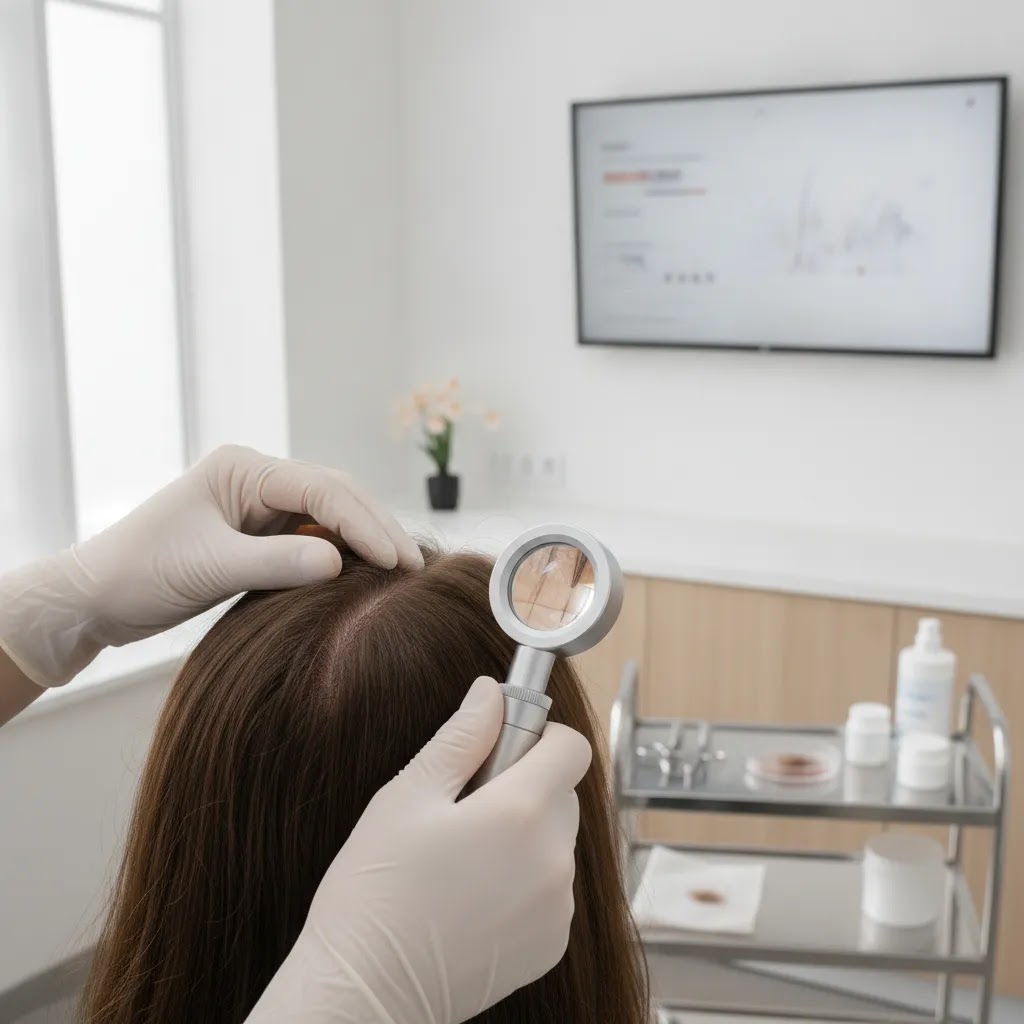
The scalp exam should assess density distribution, miniaturization pattern, and signs of inflammation. Dermoscopy or trichoscopy, if available, can help distinguish pattern hair loss from inflammatory or scarring conditions. A pull test may also help quantify active shedding. In addition, standardized photographs under consistent lighting and hair positioning remain one of the most practical tools for monitoring response over time, whatever hair loss treatment you choose.
When medical review should come before procedural hair loss treatment
Not every patient needs laboratory tests. However, clinicians often consider them when the history or exam suggests a systemic contributor or when diffuse shedding is prominent. In those settings, clinicians may review iron studies, thyroid function testing, vitamin D, vitamin B12, and zinc.
Clinicians should interpret these in context rather than treat them as a checklist. The goal is simple: avoid missing a correctable driver of shedding while a patient invests time and money in hair procedures.
Certain features should prompt earlier dermatology review instead of a menu-based selection of PRP, devices, or regenerative injections. Red flags include scarring or loss of follicular openings, rapid diffuse shedding with visible thinning over a short period, scalp pain or burning, significant scaling or pustules, and clearly patchy loss that suggests an autoimmune process. If you are a patient, use these signs as a reason to consult a qualified medical professional before starting any hair loss treatment, especially any injectable or surgical procedure.
Head-to-Head Comparison Table
| Option | Typical Role | Evidence Base | Procedure Burden | Regulatory / Clinical Notes | Often Best For |
|---|---|---|---|---|---|
| Minoxidil | First-line medical therapy | Relatively established for androgenetic alopecia | Low, but requires long-term adherence | Well-known medication pathway; monitor tolerance and formulation choice | Early to moderate pattern hair loss |
| PRP | Adjunctive in-clinic biologic procedure | Moderate but heterogeneous evidence | Repeated sessions required | Protocol quality varies widely between clinics | Patients seeking non-surgical procedural support |
| Laser / LLLT | Adjunctive device therapy | Moderate for selected users | Ongoing regular use | Device parameters and consistency affect outcomes | Patients wanting a non-invasive add-on |
| Stem cell / exosome approaches | Regenerative or investigational pathway | Emerging and less standardized | Procedure-based and clinic-dependent | Regulatory framing varies by jurisdiction; product characterization matters | Clinically selected cases after informed consent and evidence discussion |
| Hair transplant | Surgical restoration | Established for selected candidates | Higher upfront burden | Does not replace medical stabilization | Advanced patterned loss with adequate donor supply |
Path 1: Minoxidil Hair Loss Treatment
Minoxidil remains one of the most common medical options for androgenetic alopecia because it is accessible, relatively well studied, and easy to combine with other care. Clinicians usually consider this hair loss treatment early in the pathway because patients can start it without procedural scheduling and because it targets follicular cycling rather than only cosmetic coverage. A more detailed review is available in this minoxidil comparison.
Why this hair loss treatment often comes first
Minoxidil has practical advantages. Clinicians can start it while they continue diagnostic clarification, provided there are no contraindications and pattern hair loss is likely. Evidence summarized in clinical literature indexed on PubMed suggests benefit in many patients with androgenetic alopecia. However, results vary, and patients usually need continued use to maintain gains.
Strengths
Considerations
Patients often compare minoxidil against PRP as if one replaces the other. In practice, minoxidil often anchors hair loss treatment, while PRP may sit on top as an adjunct for selected patients. That is why the “minoxidil versus PRP” debate can mislead when people frame it as an either-or choice.
Path 2: PRP Hair Loss Treatment
PRP for hair loss is an autologous procedure in which clinicians prepare platelet-rich plasma from the patient’s own blood and introduce it into the scalp. It usually sits between medication and surgery: more involved than topical treatment, but less invasive than transplantation. For a deeper session-by-session review, see this PRP guide.
Where PRP hair loss treatment may fit
Studies suggest PRP may improve hair density or hair count in some patients with androgenetic alopecia, but protocol heterogeneity remains a major limitation. Differences in centrifugation method, platelet concentration, activation technique, injection spacing, maintenance scheduling, and whether the preparation is leukocyte-rich or leukocyte-poor can all affect comparability between studies. As a result, PRP results in the literature look encouraging but not uniform.
Strengths
Considerations
For clinics, the key question is not whether PRP appears on a menu. Instead, ask whether the team can explain preparation parameters, sterility controls, patient selection, and realistic expectations clearly. PRP usually works best as one part of a broader hair loss treatment plan rather than as a standalone promise.
Path 3: Laser Hair Loss Treatment and LLLT
Laser-based hair treatment usually refers to low-level light therapy, often delivered through caps, combs, or helmet systems. It attracts patients who want a non-invasive route and clinics that want a lower-risk adjunctive option. A more detailed overview appears in this laser/LLLT article.
How this hair loss treatment compares with PRP and minoxidil
LLLT usually sits in the adjunct category. It may help patients who want to supplement medication or who are not ready for injections. Some studies report improved density or thickness parameters, but effect sizes can be modest and depend on consistent use. Because many patients use it at home, adherence often matters more than injection technique.
Strengths
Considerations
For patients comparing PRP versus laser, the practical distinction is intensity versus convenience. PRP offers an in-clinic intervention with a stronger procedural component. By contrast, LLLT offers lower-intensity support with more reliance on long-term routine use.
Path 4: Stem Cell and Exosome Hair Loss Treatment
Stem cell hair loss treatment and exosome hair loss procedures are among the most discussed regenerative options, but they also demand the greatest caution. The term may refer to different biological materials, manufacturing methods, or clinic workflows. That alone makes cross-clinic comparison difficult.
You can explore Regenexasia’s broader clinical framing on regenerative applications under Regenerative Cell Therapy. A focused article on hair applications is available here: stem cell and exosome therapy for hair loss.
Why these hair loss treatment options draw attention
The appeal is understandable. Marketers often position regenerative biologics as more advanced than PRP and more “natural” than medication. Research into follicular signaling, extracellular vesicles, and regenerative microenvironments is active, and early studies suggest there may be biologic potential. Even so, mechanism does not equal established clinical benefit. Product characterization, source material, dosing logic, sterility assurance, and jurisdiction-specific regulatory status all matter.
Strengths
Considerations
For readers investigating this route, the cross-hub review on regenerative hair therapy helps frame where stem cell-based discussions fit within the wider regenerative medicine field. The most responsible clinical position is that these approaches may suit selected settings. However, clinicians should not present them as universally established or directly comparable to long-standing first-line hair loss treatment.
What “Stem Cell” and “Exosome” Means in Hair Clinics, and How to Vet Quality

In hair clinics, “stem cell” and “exosome” often function as umbrella terms rather than precise product descriptions. That creates a practical problem for patients who want to compare options and for clinics that need to govern risk. Two offerings with the same marketing label can be biologically and operationally very different.
Common product categories behind regenerative hair loss treatment claims
At a high level, patients commonly encounter autologous micrograft style preparations, adipose-derived preparations, umbilical cord derived products, conditioned media, and extracellular vesicle or exosome preparations. Autologous micrografts usually come from the patient’s own tissue and are processed for same-day use, but preparation and characterization vary. Adipose-derived preparations can refer to a range of tissue-derived products, and the degree of manipulation and intended use can affect regulatory treatment. Umbilical cord derived products are donor-derived, so they require especially careful attention to donor screening, manufacturing controls, and traceability.
Conditioned media is sometimes marketed interchangeably with exosomes, even though conditioned media can include a mixture of proteins and soluble factors that may not be concentrated or characterized as extracellular vesicles. “Exosomes” and extracellular vesicles refer to membrane-bound particles released by cells that can carry proteins, lipids, and nucleic acids such as microRNA. In hair restoration, clinicians usually discuss their proposed role as signaling modulation rather than direct follicle replacement.
What is inside the product and why it matters
For readers comparing PRP versus exosomes, it helps to stay clear on what the material is supposed to do. PRP is a platelet-derived mixture rich in growth factors and cytokines that may influence wound healing and follicular cycling. Exosome and extracellular vesicle preparations are often described as delivering signaling cargo that could influence inflammation, angiogenesis, and dermal papilla related pathways. That biology is plausible. In practice, however, real-world outcomes depend on product characterization, dosing logic, delivery technique, and patient selection. The gap between a mechanistic hypothesis and reliable clinical benefit is exactly where informed consent and quality governance matter most.
How clinics can vet regenerative hair loss treatment quality
Clinics and patients can use a practical governance checklist to judge whether a regenerative biologic hair offering is being presented responsibly. First, review source documentation, including the tissue source, donor screening for donor-derived products, and batch-level traceability. Second, assess manufacturing controls, such as GMP or equivalent quality systems where applicable, and clarify whether processing occurs in a controlled facility or as a clinic-prepared procedure. Third, ask about testing and release criteria, which may include sterility testing, endotoxin testing, identity characterization, and documented handling conditions. Fourth, confirm cold chain integrity, since many biologic products require defined storage and transport ranges. Finally, review the documentation and consent language. A high-quality provider should describe the evidence base accurately, avoid implying certainty that does not exist, and explain known risks, theoretical risks, and unknowns clearly.
Malaysia readers often want reassurance that a regenerative hair procedure is “approved,” but the more accurate question is how the offering fits Malaysia’s oversight environment. In Malaysia, the Ministry of Health provides healthcare system governance and the National Pharmaceutical Regulatory Agency is central to oversight for pharmaceuticals and certain biologic products. How a specific regenerative product is regulated can depend on whether it is considered a drug, biologic, device, or procedure using autologous material.
In addition, the degree of manipulation and intended use can materially change that classification. Patients can ask the provider to explain, in plain language, what the product is, where it is manufactured, what documentation supports quality and traceability, and what local compliance pathway the clinic relies on. Clinics adopting these services should align procurement, documentation, and clinical protocols with applicable national requirements rather than rely on marketing claims. For broader context on related uses, see exosome therapy applications and stem cell therapy applications.
Other Hair Loss Treatment Paths Often Added or Escalated To
Finasteride and dutasteride
For many male patients with androgenetic alopecia, DHT-directed treatment can be central rather than optional. The comparison between 5-alpha-reductase inhibitors is covered in this finasteride article. These therapies may be highly relevant where progressive miniaturization is the main process being targeted, although side effect counseling is essential and treatment suitability must be individualized.
Microneedling
Microneedling is often used as an adjunct to topical or biologic approaches. It may support transdermal delivery or stimulate wound-healing pathways, but protocol quality matters. See this review of microneedling for a fuller discussion.
Hair transplantation
Transplantation remains an established option for selected patients, particularly where follicular loss has advanced and donor supply is adequate. It does not replace medical management in every case. The practical issues around graft techniques and clinic choice are covered in transplant.
Common Decision Mistakes
Setting Expectations for Hair Loss Treatment: Timelines, Maintenance, and Combination Planning
Most dissatisfaction with hair loss treatment does not come from choosing one wrong modality. More often, it comes from timeline mismatch and poor understanding of maintenance. Hair follicles cycle slowly, so even an effective plan may first reduce shedding or stabilize loss before it produces visible regrowth. A practical framework separates three goals: reducing shedding, stabilizing progression, and improving visible density. These goals do not always appear together, and different routes influence them on different timelines.
Typical hair loss treatment timelines
With minoxidil and other medical therapy, early changes can include reduced shedding over the first few months, followed by gradual thickening or density improvement over subsequent months in some responders. PRP protocols often require multiple sessions before changes become meaningful, and clinics that monitor properly usually rely on standardized photos and consistent parting patterns rather than short-term mirror checks. Laser or LLLT usually behaves like a slow adjunct, where consistency over months matters more than any immediate perceived effect.
Regenerative biologic approaches are often marketed as faster or “stronger,” but in practice the response window may still span months, and variability remains high, especially when product characterization and protocols differ. Hair transplantation has the most distinct timeline. It is a one-time procedure with a longer maturation curve, and early post-procedure shedding of transplanted hairs can occur before new growth becomes visible over later months.
Why maintenance matters in long-term hair loss treatment
Maintenance is the second reality to make explicit. For androgenetic alopecia, the underlying miniaturization process usually continues unless clinicians actively manage it. That is why stopping therapy often leads to gradual loss of gains over time, whether the initial improvement came from medication, PRP, device use, or another adjunct. Clinics that counsel responsibly typically set a follow-up structure that includes interval photography, adverse effect checks for medications where relevant, and planned decision points where dose, frequency, or add-on routes are adjusted. Patients should expect periodic reassessment rather than a one-and-done transaction.
How combination planning improves hair loss treatment strategy
Combination planning often produces a more coherent strategy, provided the diagnosis is correct and expectations stay realistic. Men with early to moderate androgenetic alopecia often use a medical anchor therapy and may add procedural adjuncts such as PRP or LLLT if goals include added thickness, faster stabilization, or support where adherence is challenging. Women with pattern hair loss often also use minoxidil as a baseline, but clinicians may place greater emphasis on iron status, thyroid dysfunction, or other contributors when diffuse shedding is prominent.
Early-stage patients usually benefit most from stabilization-first planning, while advanced-stage patients may need a frank discussion about whether non-surgical approaches can meet cosmetic goals. Escalation to transplant discussion is reasonable when patterned loss is established, donor supply is adequate, and the gap between desired density and likely non-surgical response is large. Even then, medical stabilization usually remains part of responsible long-term planning.
If you are a patient, use timelines and maintenance expectations as part of your consent process, and consult a qualified medical professional before starting or stopping therapy. If you are a clinic, treating hair restoration as a longitudinal plan with measurable checkpoints usually leads to safer decisions and clearer patient satisfaction than presenting each route as an isolated product.
How to Choose a Hair Loss Treatment Plan or Clinic in Malaysia
Malaysia-based readers often search for a single best hair loss clinic, but treatment quality depends on several process-level factors that matter more than branding alone. This overview of clinics can help structure that evaluation.
1. Confirm the diagnosis first
A good clinic should distinguish patterned hair loss from inflammatory, autoimmune, scarring, medication-related, or nutritional causes. If diagnostic uncertainty is high, the team should not reduce hair loss treatment to a menu selection.
2. Match the route to the stage of hair loss
Earlier thinning may justify medical therapy and adjunctive support. More advanced loss may require discussion of transplantation, especially if cosmetic expectations exceed what non-surgical treatments typically deliver.
3. Ask how protocols are standardized
This step is especially important for PRP, microneedling, and regenerative biologic treatments. Consistency in preparation, aseptic handling, treatment spacing, and follow-up photography affects both safety and interpretability.
4. Evaluate claims against evidence maturity
Minoxidil and DHT-modifying therapy generally sit on more established clinical ground for pattern hair loss. PRP has useful but variable data. Stem cell and exosome-related approaches should be framed with more uncertainty and more careful consent language. Readers who want broader provider and product context can review exosome therapy malaysia clinic.
5. Look for realistic counseling
The best clinics usually explain maintenance needs, possible non-response, and the difference between stabilization and regrowth. That style of counseling is often a better sign of quality than aggressive promises.
Regenexasia serves as an evidence-oriented regional resource for regenerative medicine discussions in Asia. For clinics evaluating biologic hair restoration pathways or patients trying to understand how advanced regenerative options compare with more established approaches, it may be useful to review Regenexasia’s educational materials and consult a qualified medical professional before proceeding.
Next Steps and Deeper Reading

If your main question is whether to start with medication or a procedural route, begin with the minoxidil and PRP articles. If you are already considering advanced biologic approaches, continue to the stem cell and exosome review. If your concern is clinic selection or surgical timing, the clinic and transplant resources are the logical next reads. The broader Hair Loss & Alopecia category can help you navigate adjacent topics systematically.
Glossary
Androgenetic alopecia
A common patterned form of hair loss influenced by genetics and androgen signaling.
PRP
Platelet-rich plasma, an autologous blood-derived preparation used in some procedural hair protocols.
LLLT
Low-level light therapy, a non-invasive device-based approach that may support hair growth in selected users.
Exosomes
Extracellular vesicles involved in intercellular signaling; in hair restoration they are discussed as a regenerative biologic approach, though clinical standardization remains limited.
Miniaturization
The progressive shrinking of hair follicles, commonly seen in pattern hair loss.
Donor area
The scalp region from which hair follicles are harvested for transplantation.
Clinical Considerations for Hair Loss Treatment
The best hair loss treatment is not a universal category. It is a diagnosis-matched pathway. Current research indicates that established treatments for androgenetic alopecia, particularly minoxidil and, in appropriate cases, anti-androgen or anti-DHT medication, generally provide the clearest baseline evidence. PRP may help as an adjunctive procedure, but protocol heterogeneity limits direct comparison across clinics. Laser or LLLT may offer a lower-intensity adjunct for patients who prioritize non-invasive care and can maintain regular use. Stem cell and exosome-based approaches remain an area of active interest, but evidence and regulatory positioning are still evolving.
Readers in Asia should also recognize that regenerative products and procedures are not regulated identically across markets. Bodies such as Singapore HSA, Japan PMDA, South Korea MFDS, and Australia TGA may apply different standards depending on whether the intervention is treated as a medical device, biologic product, or practice-of-medicine procedure. Clinics should assess sourcing, processing, documentation, and informed consent carefully before adopting or recommending advanced regenerative hair protocols.
Hair Loss Treatment Strengths and Considerations
Strengths
Considerations
Frequently Asked Questions
Is minoxidil better than PRP for hair loss?
They serve different roles. Minoxidil is usually a first-line medical therapy with a more established evidence base for androgenetic alopecia, while PRP is often used as an adjunctive in-clinic procedure. In some clinical contexts they are combined rather than substituted. The stronger option depends on diagnosis, treatment goals, tolerance, and willingness to maintain therapy over time.
Is PRP a permanent hair regrowth treatment?
No responsible clinician should present PRP as permanent. Research suggests some patients may experience improvement in density or shedding control, but maintenance sessions are commonly needed and response varies. Protocol design also matters. PRP is better understood as a management strategy that may support hair growth, not as a one-time definitive solution.
Do stem cell or exosome treatments work better than PRP?
Current research does not support a blanket claim that they work better. Stem cell and exosome-related hair procedures are scientifically interesting, but evidence is still emerging and standardization is limited. PRP has a longer clinical track record in hair practice, even though it also has variability. Product characterization and regulatory context are essential in this comparison.
Is laser treatment for hair loss worth trying?
It may be reasonable for patients seeking a non-invasive adjunct, especially when expectations are realistic and consistent use is feasible. Studies indicate some benefit for selected users, but outcomes are often modest compared with what patients imagine from advertisements. Laser or LLLT typically works best as part of a broader treatment plan rather than as a standalone answer.
Where does finasteride fit if this guide focuses on PRP, laser, stem cells, and minoxidil?
For many male patients with androgenetic alopecia, finasteride or related DHT-directed therapy is central because it addresses a major disease mechanism. It belongs in the treatment map even if it is not one of the four headline comparison paths. Its suitability depends on sex, diagnosis, contraindications, and informed discussion of adverse effects and monitoring.
When should hair transplant be considered instead of regenerative treatments?
Hair transplantation is typically considered when follicular loss is advanced, cosmetic coverage needs exceed what non-surgical treatments may deliver, and donor supply is adequate. It is often best evaluated after the pattern of loss is stabilized medically. Regenerative or procedural adjuncts may still play a role before or after surgery, depending on the case.
Are stem cell hair treatments approved in Malaysia?
Regulatory status can depend on the exact product type, degree of manipulation, delivery method, and treatment setting. In regenerative medicine, broad marketing language often obscures these distinctions. Patients and clinics should request clear information on product source, processing, and regulatory positioning, and should verify that claims are aligned with current local healthcare and product oversight requirements.
How should a clinic evaluate a regenerative hair treatment provider?
A clinic should review biological source material, processing controls, sterility and traceability documentation, intended use framing, patient selection criteria, consent process, and any jurisdiction-specific regulatory obligations. Scientific plausibility alone is not enough. A provider should be able to explain what the product is, how it is characterized, and where evidence remains limited or preliminary.
Can women use the same hair loss treatments compared here?
Some options overlap, but the decision framework may differ. Minoxidil is commonly used in women with pattern hair loss, while anti-androgen choices require individualized assessment. PRP and LLLT may also be considered in selected cases. The underlying diagnosis remains the key factor, and women with sudden shedding or diffuse thinning may need broader medical evaluation first.
How can I help hair growth?
Start by confirming the diagnosis, because the best way to support hair growth depends on whether you are dealing with androgenetic alopecia, telogen effluvium, alopecia areata, traction, or an inflammatory scalp disorder. For pattern hair loss, medical therapy such as minoxidil is often used as a baseline, and procedural adjuncts like PRP or LLLT may be added in selected patients. A clinician can also assess whether contributors such as iron deficiency, thyroid dysfunction, or medication effects are relevant in your case before you invest in procedural treatments.
What is the best solution for hair loss?
There is no single best solution across all patients because “hair loss” is not one condition. For androgenetic alopecia, evidence tends to support established medical options as first-line, with PRP or device-based adjuncts added when appropriate. For autoimmune or scarring forms of hair loss, early specialist management can be more important than any regenerative add-on. The most useful approach is a diagnosis-matched plan with measurable follow-up.
How can I avoid hair loss?
Some hair loss drivers are not preventable, particularly genetic pattern hair loss, but early identification and consistent management may slow progression in eligible patients. Avoiding chronic traction from hairstyles, treating scalp inflammation promptly, and reviewing medications or health changes that coincide with shedding can be helpful. If you notice rapid shedding, scalp symptoms, or patchy loss, consult a qualified medical professional early rather than self-treating with multiple products at once.
What should I do for thinning hair?
Begin with an assessment of pattern and timing, including scalp examination and standardized photographs so changes can be tracked over months. If the thinning is patterned, first-line medical therapy is often discussed, and adjuncts such as PRP or LLLT may be considered based on goals and tolerance. If thinning is sudden, diffuse, painful, scaly, or patchy, prioritize medical evaluation to rule out inflammatory, autoimmune, or systemic causes before choosing a procedural route.
Key Takeaways
Conclusion
The most useful way to compare hair loss treatment in Malaysia is to ask which route fits the diagnosis, stage of loss, evidence threshold, and maintenance capacity. Minoxidil often anchors early management. PRP may be added when a patient wants an office-based biologic procedure. Laser or LLLT may suit lower-intensity adjunctive use. Stem cell and exosome-based approaches deserve closer scrutiny because the science is evolving and the regulatory picture can vary across Asia. If you are a clinic evaluating regenerative hair treatment pathways, Regenexasia may be a useful point of discussion for evidence-aware, compliance-conscious education. If you are a patient, speak with a qualified medical professional before choosing any procedure or medication, and use comparative resources like this one to ask more precise questions.
This article is intended for informational purposes only and does not constitute medical advice. Hair loss treatments should only be pursued under the guidance of a qualified medical professional. Regulatory requirements for cell therapies and regenerative biologics vary by jurisdiction across Asia. Always consult the relevant regulatory authority and a licensed healthcare provider in your region before making any clinical or treatment decisions. References to stem cell and exosome-related hair approaches describe an evolving area of research and clinical practice and should not be interpreted as a guarantee of efficacy, safety, or regulatory approval for any specific use.
About the Author
Dr. Jay Gobi is a Kuala Lumpur-based Medical Doctor and clinical innovator supporting Regenex Asia's work in advanced cellular therapies. With frontline experience at Hospital Kuala Lumpur and a focus on evidence-based medicine, he helps bridge clinical practice, patient safety and biotherapeutic innovation across stem cell, NK cell and advanced immunotherapy applications.