
Natural Killer (NK) Cell Therapy
Natural killer cells are one of the immune system's most powerful front-line defences — specialised white blood cells that can identify and destroy cancerous or virally infected cells without prior sensitisation. NK cell therapy takes this natural capability and amplifies it, using laboratory-expanded and activated NK cells to support patients whose own immune systems are compromised, overwhelmed or outpaced by disease.
Regenex Asia manufactures therapeutic-grade NK cells in our cGMP-certified laboratory in Kuala Lumpur. Our NK cell products are expanded from carefully screened allogeneic donor material, activated to maximise cytotoxic potency, quality-tested to pharmaceutical standards and supplied for clinical use in supportive cancer immunotherapy and viral immune reconstitution.
What Are Natural Killer Cells?
Natural killer (NK) cells are a class of lymphocyte — a type of white blood cell — that form part of the innate immune system. Unlike T-cells and B-cells, which need to be trained to recognise specific threats, NK cells have a built-in ability to detect and destroy abnormal cells. They are the immune system's rapid-response team.
NK cells identify target cells through a sophisticated balance of activating and inhibitory receptors on their surface. Healthy cells display surface markers (particularly MHC class I molecules) that signal "self" to NK cells, triggering inhibitory receptors and preventing attack. Cancer cells and virally infected cells often lose or downregulate these self-markers — a phenomenon known as "missing self" — which tips the balance toward NK cell activation and killing.
Once activated, NK cells destroy target cells through two primary mechanisms: the release of cytotoxic granules (perforin and granzymes) that punch holes in the target cell membrane and trigger programmed cell death, and the expression of death ligands (such as TRAIL and FasL) that activate apoptotic pathways in the target cell.
In a healthy person, NK cells constantly patrol the body and eliminate early-stage cancer cells and virus-infected cells before they can establish or spread. In patients with cancer, chronic viral infections or age-related immune decline, NK cell numbers and function are often reduced — creating a gap in immune surveillance that disease can exploit.
NK Cells vs T-Cells vs CAR-T — What's the Difference?
| NK Cells | T-Cells | CAR-T Cells | |
|---|---|---|---|
| Part of | Innate immune system | Adaptive immune system | Engineered from adaptive system |
| Recognises threats | "Missing self" — no training needed | Requires antigen presentation | Engineered to target specific antigen |
| Speed | Immediate — first responders | Slower — requires activation | Engineered over 2–4 weeks |
| Specificity | Broad — any abnormal cell | Highly specific to one antigen | Highly specific to engineered target |
| Source for therapy | Allogeneic (donor) — off-the-shelf | Usually autologous (patient's) | Autologous (patient's, engineered) |
| Key advantage | Speed, breadth, lower cost | Specificity, immune memory | Extreme precision against known targets |
| Main risk | Generally well-tolerated | Graft-vs-host (if allogeneic) | CRS, ICANS (serious reactions) |
NK cell therapy and CAR-T therapy are not competitors — they serve different clinical roles. In some cases, they can be used sequentially or in combination. Learn more about CAR-T Cell Therapy →
How NK Cell Therapy Works: From Donor to Treatment
Donor Selection & Screening
Our NK cell therapy begins with carefully selected allogeneic donors who undergo comprehensive infectious disease screening, health assessment and immune profiling. We select donors with strong baseline NK cell activity — not all donors produce equally potent NK cells.
NK Cell Isolation
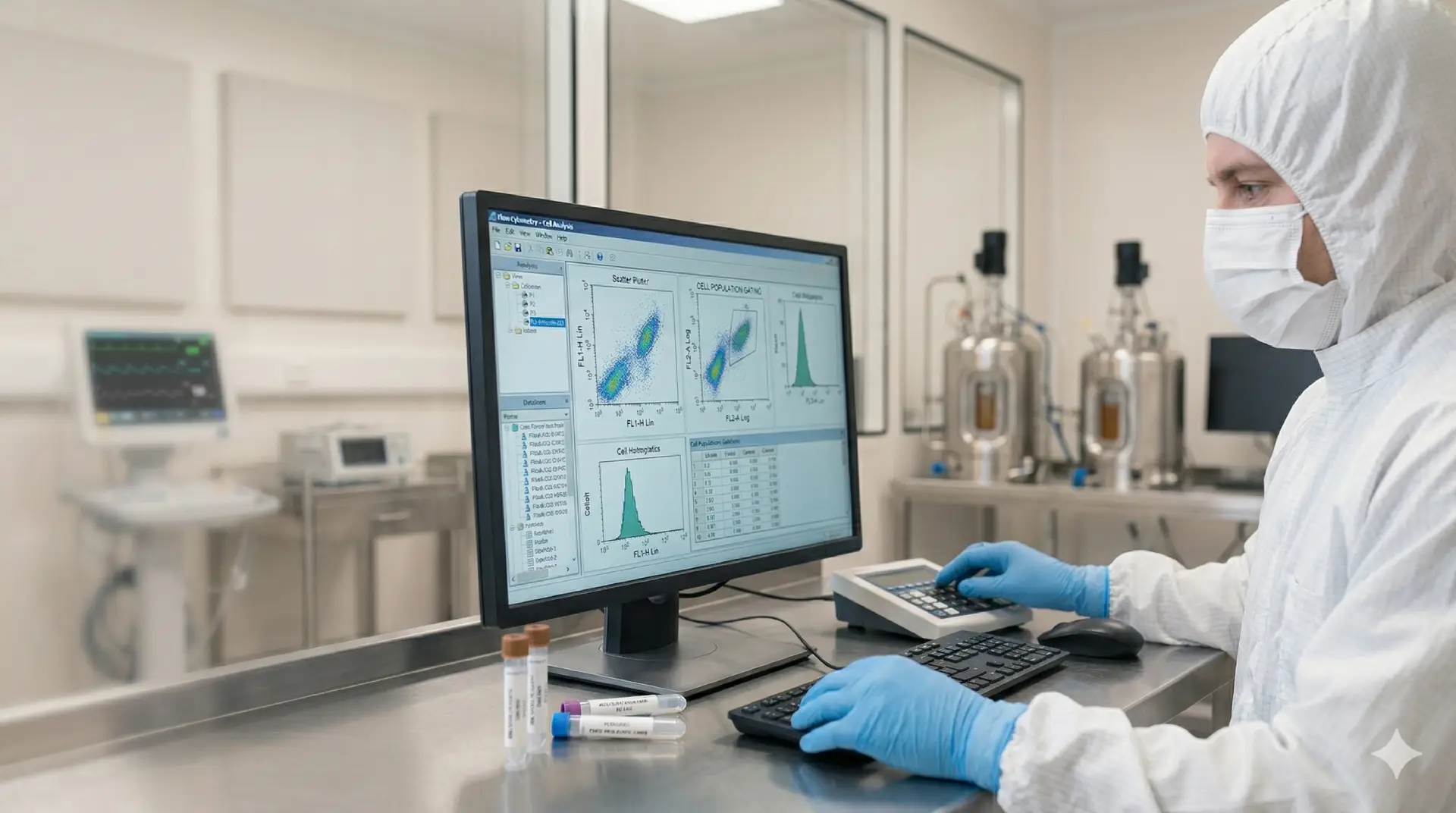
NK cells are isolated from donor material using validated separation protocols that yield a high-purity NK cell population. The target cell phenotype is CD56+ CD3− — confirmed via flow cytometry to ensure the product contains activated NK cells without contaminating T-cell populations.
Expansion & Activation
Isolated NK cells are expanded and activated in our cGMP clean room using cytokine stimulation protocols designed to maximise both cell number and cytotoxic potency. Our protocols are optimised to maintain activating receptor expression and cytotoxic granule content — producing cells that kill, not just survive.
Quality Testing & Release
Every batch undergoes: cell count and viability testing, phenotype analysis (flow cytometry for CD56+ CD3−), sterility testing, endotoxin and mycoplasma screening, and a cytotoxicity assay confirming the NK cells can kill target cells. Each batch receives a Certificate of Analysis.
Patient Administration
NK cell therapy is typically administered via intravenous (IV) infusion. The treating physician determines dosage, infusion schedule and any complementary treatments based on the patient's condition, disease stage and treatment history. In oncology contexts, NK cell therapy is often part of a broader treatment plan.
Where NK Cell Therapy Is Applied
NK Cell Therapy for Cancer
NK cell therapy is applied as a supportive immunotherapy in selected cancer cases — typically alongside or following conventional oncology treatments rather than as a standalone intervention. The rationale is that many cancers actively suppress or evade the patient's immune system, and infusing expanded, activated NK cells may help restore the immune surveillance that the cancer has disrupted.
The cancer types where NK cell therapy has been most actively investigated include:
- Blood cancers — leukaemia (particularly AML and ALL), lymphoma (including DLBCL and follicular lymphoma) and multiple myeloma. NK cells are naturally effective against haematological malignancies — this is the most established area of clinical evidence.
- Solid tumours — including lung, liver, colorectal and ovarian cancers. The evidence base for solid tumours is earlier-stage, and NK cell therapy is typically considered investigational or supportive in these contexts.
NK cell therapy is often considered for patients who have completed first-line treatment and are seeking immune support to reduce recurrence risk, or for patients with relapsed or refractory disease exploring additional treatment options.
Important: NK cell therapy is not a replacement for conventional oncology treatment. It is a supportive immunotherapy designed to complement — not substitute — the treatment plan established by the patient's oncologist.
NK Cell Therapy for HIV and Hepatitis B
NK cells play a critical role in the body's defence against viral infections. In patients with chronic viral conditions — particularly HIV and hepatitis B — NK cell numbers and function are often significantly impaired, contributing to ongoing immune suppression and vulnerability to opportunistic infections.
NK cell therapy for viral conditions aims to reconstitute the patient's immune surveillance by infusing expanded, activated NK cells that can directly target virus-infected cells and support broader immune recovery. This is not a replacement for antiviral therapy — it is designed to work alongside ongoing medical management to strengthen the immune system's overall capacity.
HIV Immune Reconstitution
For patients living with HIV who are stable on antiretroviral therapy, NK cell therapy is explored as a means to improve immune function beyond what ART alone achieves — particularly in patients with persistently low CD4 counts or impaired immune recovery despite viral suppression.
Hepatitis B Immune Support
For patients with chronic hepatitis B, NK cell therapy aims to support the immune system's ability to control viral replication and reduce the risk of disease progression to cirrhosis or hepatocellular carcinoma.
Immune System Strengthening
Beyond specific cancer or viral applications, NK cell therapy is sought by patients experiencing age-related immune decline (immunosenescence) or general immune weakness. As we age, NK cell numbers and cytotoxic function naturally decline — a process that correlates with increased susceptibility to infections, reduced cancer surveillance and slower recovery from illness.
For some patients — particularly those in the 40–60 age range seeking proactive health optimisation — NK cell therapy is incorporated into broader wellness and longevity protocols alongside MSC therapy and exosome treatment.
NK Cell Therapy vs CAR-T: Which Cancer Immunotherapy Is Right?
NK cell therapy and CAR-T cell therapy are both forms of cancer immunotherapy, but they differ fundamentally in mechanism, application and risk profile. Understanding the differences helps patients and their oncologists make informed treatment decisions.
| Feature | NK Cell Therapy | CAR-T Cell Therapy |
|---|---|---|
| Mechanism | Natural killers — no genetic engineering | T-cells genetically engineered with chimeric antigen receptor |
| Cell source | Allogeneic (donor) — off-the-shelf | Autologous (patient's own T-cells) — individual manufacturing |
| Time to treatment | Days (product ready from inventory) | 2–4 weeks (collect, engineer, expand) |
| Target specificity | Broad — recognises any "missing self" cell | Highly specific — targets one antigen (e.g. CD19) |
| Best for | Supportive immunotherapy, broader cancer types, viral infections | Specific relapsed/refractory blood cancers (ALL, DLBCL, myeloma) |
| Risk of CRS/ICANS | Low — rarely causes severe cytokine storms | Significant — known serious risks |
| Cost | Generally lower than CAR-T | Among the most expensive cancer treatments |
When NK cell therapy may be more appropriate
- Patient is seeking immune support alongside conventional cancer treatment
- Cancer type is not a specific CAR-T indication
- Patient cannot tolerate the risk profile of CAR-T (CRS, ICANS)
- Faster treatment timeline is needed
- Patient has viral co-infection requiring immune reconstitution
When CAR-T may be more appropriate
- Patient has a specific relapsed/refractory blood cancer with a proven CAR-T indication
- Targeted precision against a known antigen is clinically indicated
- The patient's oncologist recommends CAR-T based on disease characteristics
In some treatment plans, NK cell therapy and CAR-T therapy may be used sequentially — NK cells for immune support before or after a CAR-T infusion. Learn more about CAR-T Cell Therapy →
How Regenex NK Cells Are Manufactured
Our NK cell manufacturing process takes place entirely within our cGMP-certified facility under KKM regulatory oversight. From donor selection through isolation, expansion, activation, quality testing and final release, every step follows validated protocols designed to produce NK cells with maximum cytotoxic potency and consistent batch quality.
- Functional potency testing — we don't just count cells. Every batch includes a cytotoxicity assay confirming the NK cells can kill target cells effectively.
- Phenotype verification — flow cytometry confirms CD56+ CD3− identity and activating receptor expression on every batch.
- Passage-controlled source — our NK cell production originates from carefully profiled donor material, not from depleted or over-passaged cell lines.
- Full traceability — blockchain-verified supply chain from donor to delivery.
For Oncology & Immunology Clinics: NK Cell Supply
Regenex Asia supplies cGMP-manufactured NK cell products to oncology clinics, hospitals and immunology centres. If your practice offers cancer immunotherapy or immune reconstitution services, our NK cell products can be integrated into your clinical protocols with full quality documentation and regulatory compliance support.
- cGMP-manufactured, cytotoxicity-tested NK cell products with full Certificate of Analysis
- Supply agreements tailored to your clinical volume and treatment schedule
- Phenotype and potency data for every batch
- Regulatory compliance documentation for your jurisdiction
- Clinical protocol consultation and training support
Is NK Cell Therapy Safe?
NK cell therapy is generally considered to carry a more favourable safety profile than other forms of cancer immunotherapy — particularly compared to CAR-T therapy, which carries meaningful risks of cytokine release syndrome (CRS) and ICANS.
Because NK cells are part of the innate immune system and do not require genetic engineering, the risk of severe immune over-reactions is lower. Allogeneic NK cells also carry a lower risk of graft-versus-host disease (GvHD) than allogeneic T-cell products, because NK cells have a different pattern of immune recognition.
That said, NK cell therapy is not risk-free. Potential side effects may include:
- Mild to moderate fever, chills or fatigue following infusion — typically resolving within 24–48 hours
- Transient flu-like symptoms as the immune system responds to the infused cells
- Mild infusion-related reactions (nausea, headache)
- Rare allergic or hypersensitivity reactions
- In cancer patients, tumour lysis syndrome (TLS) is a theoretical risk if NK cells are highly effective against a large tumour burden — managed with standard oncology monitoring
Our medical team discusses all potential risks with patients and their referring oncologists during the pre-treatment consultation. NK cell therapy for cancer patients is always coordinated with the patient's existing oncology team.
Frequently Asked Questions About NK Cell Therapy
What does NK cell therapy actually do?
NK cell therapy involves infusing expanded, activated natural killer cells into a patient to strengthen their immune system's ability to identify and destroy cancer cells or virus-infected cells. It works by supplementing the body's existing immune surveillance — not by replacing conventional treatment.
Is NK cell therapy a cure for cancer?
No. NK cell therapy is a supportive immunotherapy — it is designed to complement conventional cancer treatment (surgery, chemotherapy, radiation), not replace it. It may help strengthen the immune response against cancer, but it is not a standalone cure. We are transparent about this with every patient.
Can NK cell therapy help with HIV?
NK cell therapy for HIV aims to support immune reconstitution — strengthening the immune system beyond what antiretroviral therapy (ART) alone achieves. It does not replace ART and should not be considered a cure or alternative to standard HIV treatment. It is explored as a supplementary approach for patients with persistently impaired immune recovery despite viral suppression.
What is the difference between NK cell therapy and CAR-T?
NK cells are natural immune cells expanded from donor material — they're ready to use without genetic engineering. CAR-T cells are a patient's own T-cells that have been genetically modified to target a specific cancer antigen. NK therapy is broader, faster to deploy and carries lower risk of severe side effects. CAR-T is more precisely targeted but limited to specific blood cancer indications and carries risks of CRS and ICANS. They can be complementary.
How many NK cell therapy sessions are needed?
Treatment frequency depends on the clinical indication. Cancer patients may receive multiple infusions over a defined treatment period, often coordinated with their broader oncology plan. Patients receiving NK therapy for viral immune reconstitution or general immune support may follow a different schedule. Your physician will recommend a protocol based on your individual case.
How much does NK cell therapy cost?
We do not publish pricing on our website. Treatment costs depend on the clinical indication, number of infusions and protocol complexity. Our team provides a detailed treatment proposal following your consultation.
Are there clinical trials for NK cell therapy?
Yes — NK cell therapy is the subject of active clinical trials globally, including for blood cancers, solid tumours and viral infections. Regenex Asia maintains active research protocols in collaboration with University of Malaya and UKM. Patients interested in participating in clinical research should discuss this with our medical team during consultation.
Can NK cell therapy be combined with other treatments?
Yes. NK cell therapy is frequently combined with conventional oncology treatments and may be used alongside or sequentially with CAR-T therapy, MSC therapy or other Regenex products depending on the clinical context. All combination protocols are determined by the treating physician in coordination with the patient's existing medical team.
Related Therapies
CAR-T Cell Therapy
Genetically engineered T-cell therapy for specific relapsed/refractory blood cancers. The most targeted form of cancer immunotherapy — often considered alongside NK cell therapy.
CIK Cell Therapy
Cytokine-induced killer cell therapy for supportive cancer immunotherapy. Shares immune-boosting characteristics with NK cell therapy but uses a different cell population.
Stem Cell Therapy (MSC)
Regenerative stem cell therapy for tissue repair and anti-aging. A different mechanism to NK therapy — some patients combine MSC and NK treatments in comprehensive wellness protocols.
Discuss Whether NK Cell Therapy May Support Your Treatment Plan
Our medical team works alongside your existing oncologist or physician to assess whether NK cell therapy is appropriate for your condition. We also supply NK cell products to clinical partners — enquire about our B2B programme.