
Mesenchymal Stem Cell (MSC) Therapy
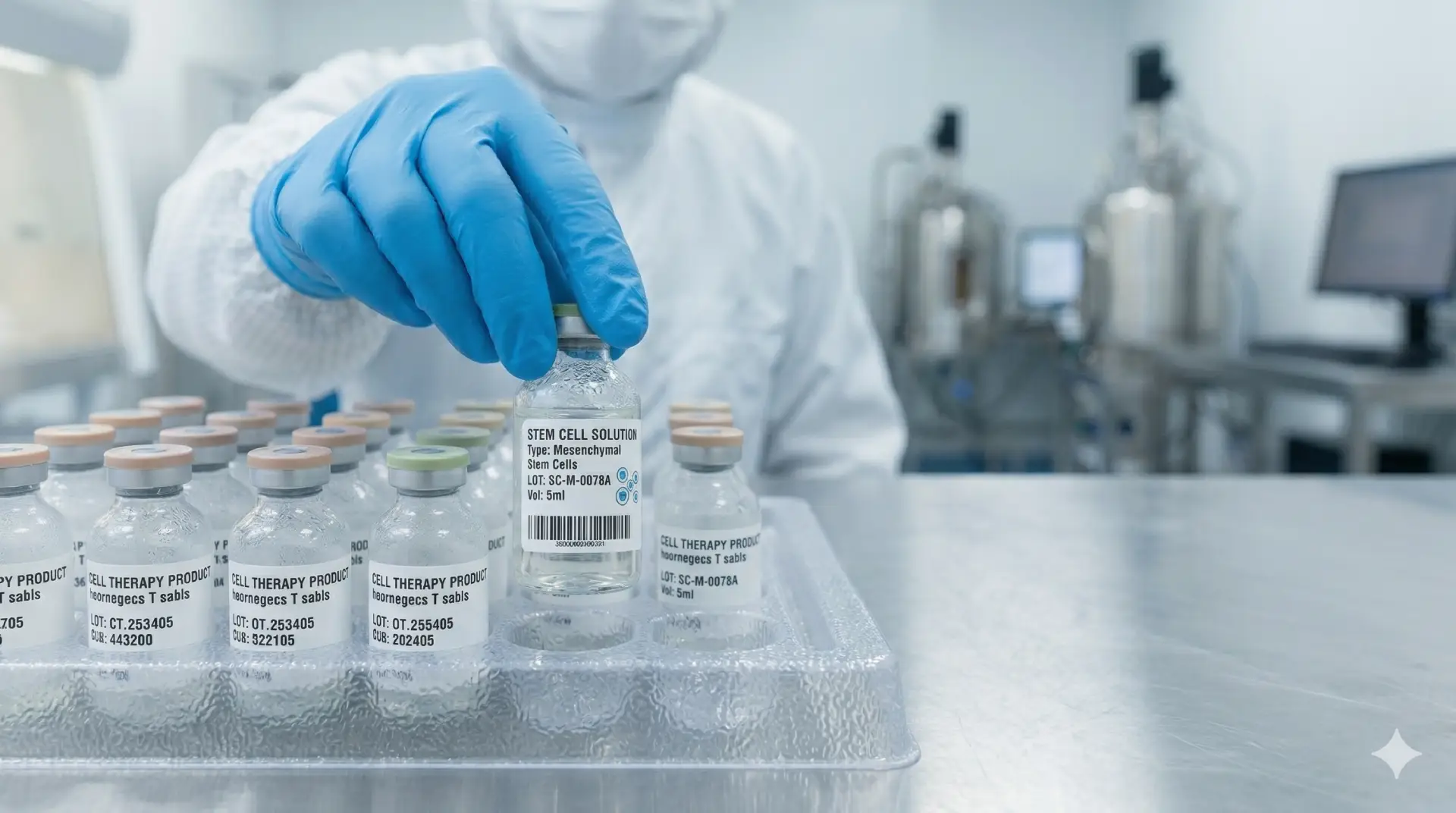
Mesenchymal stem cell therapy is the foundation of regenerative medicine — and the most widely applied treatment in the Regenex Asia portfolio. Our MSC products are manufactured from ethically sourced umbilical cord tissue in our cGMP-certified laboratory in Kuala Lumpur, expanded to Passage 2 purity, and quality-tested to pharmaceutical-grade standards before reaching a single patient.
MSC therapy supports tissue repair, reduces chronic inflammation and promotes regeneration across a wide range of conditions — from osteoarthritis and chronic wounds to hair loss, neurological decline and age-related degeneration. It is also the foundation of our anti-aging and longevity protocols, which represent the most requested treatment category among our international patients.
What Are Mesenchymal Stem Cells?
Mesenchymal stem cells (MSCs) are multipotent adult stem cells found in several tissues throughout the body, including bone marrow, adipose (fat) tissue and — most relevantly for clinical use — umbilical cord tissue (Wharton's jelly). Unlike embryonic stem cells, MSCs do not raise the same ethical concerns and can be sourced from donated umbilical cord tissue that would otherwise be discarded after birth.
What makes MSCs valuable in regenerative medicine is their ability to differentiate into multiple cell types — including bone, cartilage, muscle and fat cells — and their potent paracrine signalling. This means MSCs don't just replace damaged cells directly; they also release growth factors, cytokines and extracellular vesicles (exosomes) that modulate the local tissue environment, reduce inflammation, suppress harmful immune responses and stimulate the body's own repair mechanisms.
At Regenex Asia, we use allogeneic MSCs derived exclusively from umbilical cord tissue. Umbilical cord-derived MSCs offer several advantages over bone marrow or adipose-derived alternatives: they are younger (and therefore more potent), they can be expanded more efficiently, and they carry a lower risk of age-related cellular degradation. Our MSCs are manufactured at Passage 2 — the earliest commercially viable expansion stage — which preserves the highest possible cell viability, differentiation potential and therapeutic consistency.
Why Passage 2 Matters
Every time stem cells are expanded (passaged) in a laboratory, they lose a small amount of their regenerative potential. By Passage 4 or 5, cells begin to show reduced viability, altered gene expression and diminished therapeutic consistency. Many cell therapy providers use later-passage cells because they're cheaper to produce in volume. Regenex manufactures exclusively at Passage 2 — the point where cell quality, batch yield and therapeutic potential are optimally balanced. This costs more to produce. It also means every patient receives cells at their most potent.
How MSC Therapy Works: From Laboratory to Treatment
Cell Sourcing & Donor Screening
Our MSCs begin with ethically donated umbilical cord tissue from healthy, screened donors. Every donor undergoes comprehensive infectious disease screening and the tissue is processed within controlled timeframes to ensure cell quality from the very first step.
Cell Isolation & Expansion
In our cGMP clean room, MSCs are isolated from the umbilical cord tissue (Wharton's jelly) and expanded in controlled culture conditions. We use a proprietary pooled donor technology — combining cells from multiple screened donors — to achieve consistent, high-quality batches while reducing donor-to-donor variability.
Quality Testing & Release
Before any MSC product leaves our laboratory, it undergoes sterility testing, viability testing, endotoxin screening, mycoplasma testing and cell surface marker analysis (CD73+, CD90+, CD105+). Every batch receives a Certificate of Analysis documenting all test results.
Cryopreservation & Delivery
Tested and approved MSC products are cryopreserved under controlled conditions for storage and transport. Our blockchain-verified traceability system tracks each product from manufacturing through storage and final delivery to the clinic or treatment facility.
Patient Administration
MSC therapy is administered by a qualified medical professional — typically via intravenous (IV) infusion, direct injection into the affected area, or localised application depending on the condition. The treating physician determines the route, dosage and schedule based on the patient's individual condition and goals.
Conditions Supported by MSC Therapy
MSC therapy is our most broadly applied treatment, supporting patients across multiple medical disciplines. The following conditions represent the primary areas where MSC therapy is applied at Regenex Asia, informed by clinical research and our treatment protocols developed in collaboration with University of Malaya and UKM.
Anti-Aging & Longevity
MSC therapy is the cornerstone of our anti-aging and longevity protocols — and the single most requested treatment among our international patients. The premise is straightforward: as we age, our body's regenerative capacity declines. Introducing young, potent MSCs may help support tissue renewal, reduce systemic inflammation (a key driver of biological aging), improve skin quality, boost energy levels and support organ function.
Our anti-aging protocol is designed for healthy adults aged 35–60 who want to invest in long-term health optimisation rather than treating a specific disease. It is particularly popular among patients from Japan, Southeast Asia and the Middle East.
Learn more about anti-aging cell therapyOsteoarthritis & Joint Degeneration
MSCs have been extensively studied for their potential to support cartilage repair, reduce joint inflammation and slow the progression of osteoarthritis. At Regenex Asia, MSC therapy for joint conditions is typically administered via direct injection into the affected joint — most commonly the knee, hip or shoulder. This approach is being explored as a regenerative alternative or complement to conventional options such as corticosteroid injections, physiotherapy and joint replacement surgery.
Learn moreHair Loss & Alopecia
MSC therapy for hair loss targets the cellular environment of the scalp — delivering growth factors and regenerative signals that may help reactivate dormant hair follicles, improve blood supply to the scalp and support new hair growth. It is often applied alongside exosome therapy or PRP for a combined regenerative protocol. Applied for androgenetic alopecia, diffuse hair thinning and alopecia areata.
Learn moreChronic Wounds & Limb Ischemia
For patients with diabetic wounds, venous ulcers or chronic limb ischemia, MSC therapy aims to support tissue regeneration, improve local blood flow and accelerate wound closure. MSCs release growth factors that promote angiogenesis (new blood vessel formation) and modulate the inflammatory environment that often prevents chronic wounds from healing naturally.
Neurological Support
MSC therapy is under active investigation for its potential to support patients with neurodegenerative conditions. The mechanism is primarily paracrine — MSCs release neuroprotective factors that may help reduce neuroinflammation, support neuronal survival and promote limited neural repair. Current areas of interest include stroke recovery and general age-related cognitive decline.
Learn moreDiabetes & Metabolic Health
MSC therapy is being explored for its potential to support pancreatic function, improve insulin sensitivity and reduce the chronic inflammation associated with type 2 diabetes and metabolic syndrome. Diabetes is one of the top-converting conditions in our patient base, alongside kidney function and cardiac health.
Learn moreErectile Dysfunction
MSC therapy for ED targets the vascular and tissue-level factors that contribute to erectile dysfunction — promoting blood vessel repair, improving local blood flow and supporting the regeneration of smooth muscle tissue. This application is particularly relevant for patients with diabetes-related or age-related ED.
Learn moreCOPD & Asthma (Investigational)
MSC therapy is under clinical investigation for its potential anti-inflammatory and immunomodulatory effects in chronic respiratory conditions including COPD and asthma. The premise centres on MSCs' ability to reduce airway inflammation, modulate immune responses and potentially support limited tissue repair in damaged lung tissue.
Learn moreStroke Recovery
MSC therapy for stroke recovery aims to support neurological repair in the weeks and months following a cerebrovascular event. MSCs may help reduce post-stroke neuroinflammation, support the survival of existing neurons and promote limited neural regeneration — complementing conventional rehabilitation protocols.
Learn moreGeneral Immune Modulation & Wellness
Beyond specific conditions, MSC therapy is applied in general wellness and immune modulation protocols — particularly for patients seeking to optimise immune function, reduce chronic low-grade inflammation and support whole-body recovery. This overlaps significantly with our anti-aging and longevity programmes.
Is MSC Therapy Safe?
Safety is the first question any patient should ask — and we welcome it.
At Regenex Asia, our MSC products are manufactured under cGMP conditions with the same quality controls applied to pharmaceutical drug production. Every batch is tested for sterility, viability, endotoxin levels and mycoplasma contamination. Every product comes with a Certificate of Analysis documenting its quality profile.
MSC therapy using allogeneic (donor-derived) umbilical cord stem cells has been widely studied in clinical research. Because MSCs have natural immunomodulatory properties — meaning they tend to suppress rather than provoke immune reactions — the risk of serious immune rejection is generally considered low compared to other types of cell or organ transplant.
That said, no medical treatment is entirely without risk. Potential side effects of MSC therapy may include:
- Mild fever or fatigue in the hours following infusion
- Localised pain or swelling at the injection site (for direct-injection protocols)
- Rare allergic or hypersensitivity reactions
- Theoretical long-term risks that are still being studied in ongoing research
We are transparent about what MSC therapy can and cannot do. It is not a cure for any disease. Outcomes vary depending on the patient's condition, age and overall health. Our medical team discusses realistic expectations with every patient during the consultation process, and no treatment proceeds without informed consent.
Our Safety Commitment
- cGMP manufacturing with full quality testing on every batch
- KKM-approved laboratory with regular regulatory inspections
- Full informed consent process before any treatment
- Post-treatment monitoring and follow-up care
- No unsubstantiated outcome claims — ever
How Regenex MSC Therapy Compares
| Feature | What Some Providers Do | What Regenex Does |
|---|---|---|
| Cell passage | Passage 4, 5 or beyond — cheaper but lower quality | Passage 2 — highest viability and therapeutic potential |
| Donor sourcing | Single donor — higher batch variability | Pooled donor technology — consistent, high-quality batches |
| Facility | Non-certified or self-regulated facilities | cGMP-certified, KKM-approved licensed laboratory |
| Documentation | Limited or no quality documentation | Full Certificate of Analysis — sterility, viability, endotoxin, mycoplasma |
| Traceability | No supply chain verification | Blockchain-verified traceability from donor to delivery |
| Claims | Broad cure claims or guaranteed outcomes | No cure claims. Transparent communication about realistic outcomes |
Who Is a Good Candidate for MSC Therapy?
MSC therapy at Regenex Asia is most commonly sought by:
- Adults aged 35–60 seeking proactive health optimisation, anti-aging support or treatment for age-related conditions
- Patients with mild to moderate condition severity — such as early-stage osteoarthritis, diffuse hair loss, chronic low-grade inflammation or metabolic concerns
- International patients travelling to Malaysia for treatment — particularly from Japan, Indonesia, Singapore, Vietnam, the Middle East and Australia
- Patients who have researched their options and are looking for a cGMP-manufactured, quality-verified cell therapy rather than the lowest-cost option
MSC therapy may not be appropriate for patients with acute infections, active untreated cancers (where NK cell or CAR-T therapy may be more relevant), severe organ failure or certain autoimmune conditions in active flare. Our medical team assesses every patient individually during the consultation process.
Book a Consultation to Discuss Your EligibilityYour MSC Therapy Journey
Initial Enquiry & Medical Review (1–3 days)
Submit your enquiry with your medical history and condition details. Our medical team reviews your case and confirms whether MSC therapy is appropriate for your situation. This can be done remotely.
Consultation & Treatment Planning (1–2 weeks)
A detailed consultation — in person or via video call — where your doctor explains the recommended protocol, expected outcomes, potential risks and the treatment schedule. For international patients, our team begins coordinating travel logistics.
Treatment (1–3 days in KL)
You arrive in Kuala Lumpur for your scheduled treatment. Depending on your protocol, MSC therapy may involve a single session or multiple administrations over 2–3 days. Our concierge team handles airport transfers, hotel coordination and in-clinic support.
Aftercare & Follow-Up (ongoing)
Post-treatment monitoring begins immediately. Our team provides aftercare guidance and remains available for follow-up consultations. Some patients return for additional treatment cycles at intervals determined by their physician.
Frequently Asked Questions About MSC Therapy
What is the difference between autologous and allogeneic stem cells?
Autologous stem cells are harvested from the patient's own body (typically bone marrow or fat tissue). Allogeneic stem cells come from a donor — in our case, ethically sourced umbilical cord tissue. Allogeneic umbilical cord MSCs offer several advantages: they are younger, more potent, easier to quality-control at scale, and do not require the patient to undergo a separate harvesting procedure. All Regenex MSC products are allogeneic.
How many stem cells are in each treatment?
Cell dosage varies by condition and treatment protocol. Your physician will determine the appropriate cell count based on your individual case. Every batch comes with a Certificate of Analysis confirming the exact cell count, viability percentage and quality test results.
Is stem cell therapy legal in Malaysia?
Yes. Regenex Asia operates under full approval from the Malaysian Ministry of Health (KKM) as a licensed cell therapy laboratory. Our facility is cGMP-certified and subject to regular regulatory inspections. Cell therapy in Malaysia is conducted within an established legal and regulatory framework.
How long do stem cell therapy results last?
Results vary significantly depending on the condition being treated, the patient's age and overall health, and the specific protocol used. Some patients report noticeable improvements within weeks; others experience gradual changes over several months. MSC therapy is not a permanent cure for any condition — some patients benefit from periodic repeat treatments. Your physician will discuss realistic expectations during your consultation.
Can stem cell therapy be combined with other treatments?
Yes. MSC therapy is often combined with exosome therapy, PRP therapy or conventional medical treatments depending on the condition. For example, our anti-aging protocols may combine MSC infusion with exosome application, and our hair loss protocols often pair MSCs with PRP + Exosome therapy. Your physician will recommend the most appropriate combination for your case.
See also: Exosome Therapy · PRP + Exosome Therapy
What does stem cell therapy cost in Malaysia?
We do not publish pricing on our website. Treatment costs vary based on the therapy type, protocol complexity and number of sessions required. After your consultation, our team provides a detailed treatment proposal including all costs. We believe pricing should follow a thorough medical assessment — not precede it.
Are there any side effects?
Most patients tolerate MSC therapy well. Potential side effects include mild fever, fatigue, or localised discomfort at the injection site — typically resolving within 24–48 hours. Serious adverse events are rare with cGMP-manufactured, quality-tested allogeneic MSCs. A full discussion of risks and side effects is part of every pre-treatment consultation.
I'm travelling from overseas. What support do you provide?
We support international patients with end-to-end coordination: visa guidance, airport transfers, hotel arrangements and multilingual assistance throughout your stay in Kuala Lumpur. Our team coordinates your treatment schedule around your travel dates.
Related Therapies
Exosome Therapy
Cell-free regenerative vesicles derived from MSC cultures. Often combined with MSC therapy for enhanced results in hair, skin and joint applications.
PRP + Exosome Therapy
Combination protocol pairing platelet-rich plasma with exosomes. Popular for hair growth and skin regeneration — a natural complement to MSC therapy.
NK Cell Therapy
Immune-focused therapy for cancer and viral infections. A different mechanism to MSC therapy — recommended for patients with oncological or viral conditions rather than regenerative needs.
Explore Whether MSC Therapy Is Right for You
Our medical team is available to review your medical history, discuss your goals and recommend whether MSC therapy — or another Regenex treatment — may be appropriate for your situation. No commitment required.